Carrier-Managed Logistics Needs More Than Communication. It Needs Control.
Jul 11, 2026

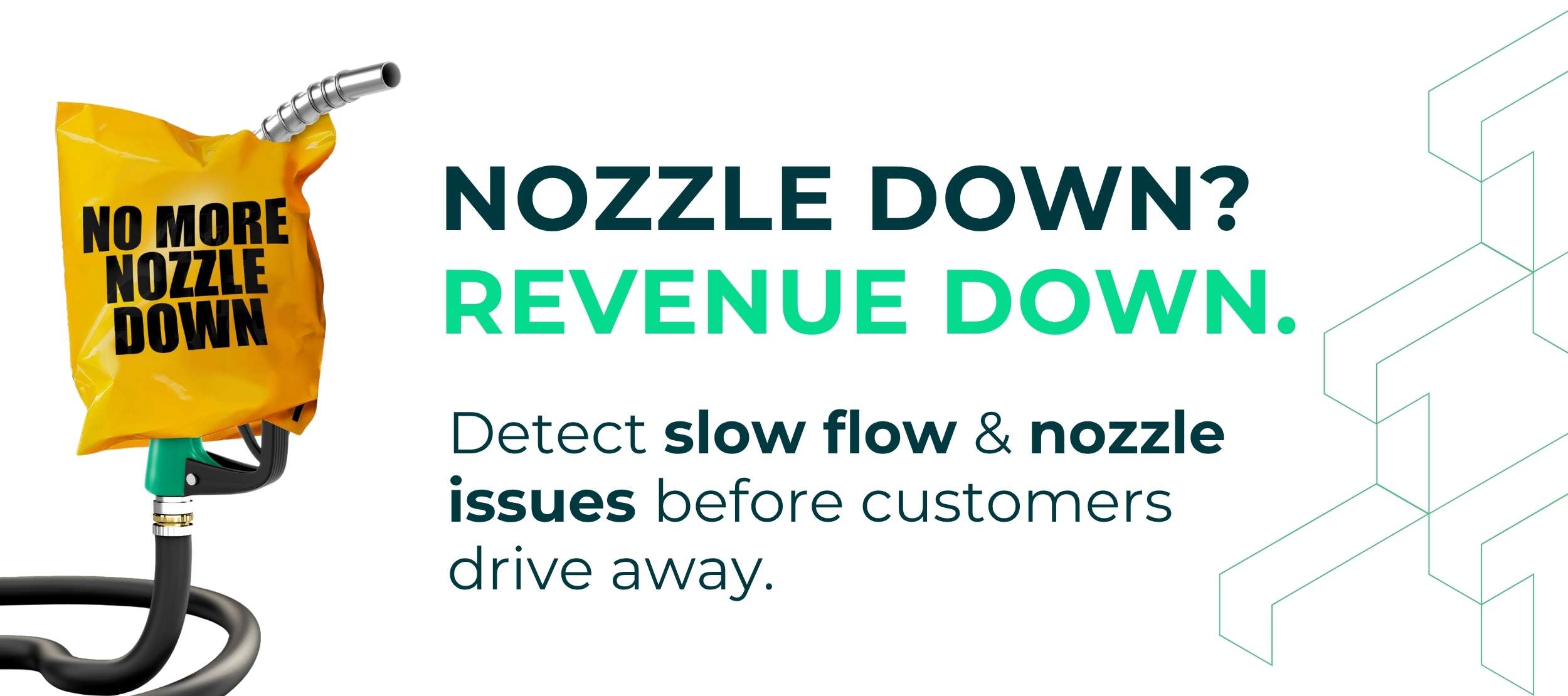
Fuel retailers need a faster way to detect slow flow before nozzle downtime affects throughput, customer experience, and revenue. Nozzle-down and slow-flow issues can reduce fuel throughput, frustrate customers, delay repairs, and quietly drain revenue across fuel retail networks.
Because many teams rely on manual reporting, site escalation, or customer complaints, these issues often go unnoticed until the revenue impact is already growing.
Flow-rate analytics help fuel operators identify where fuel is not moving as expected across sites, dispensers, and fueling positions, so teams can detect issues earlier and prioritize response faster.
Key takeaway: If fuel is moving slowly, revenue may be leaking quietly. A Dispenser Performance Assessment can help identify where slow flow, nozzle downtime, or maintenance delays may be affecting site performance.
A nozzle-down issue happens when a fueling nozzle is unavailable, bagged, out of service, or unable to perform as expected. In some cases, the nozzle may be completely unusable. In others, it may still dispense fuel but at a slower-than-normal rate.
That second scenario is known as slow flow.
Slow flow occurs when fuel moves through a nozzle, dispenser, or fueling position more slowly than expected. The asset may still appear operational, but the customer experience is degraded because fueling takes longer.
A bagged nozzle is easy to see. A slow-flowing nozzle is harder to catch. It may continue operating while creating longer fueling times, frustrated customers, reduced throughput, and missed revenue opportunities.
For fuel retailers, both nozzle-down and slow-flow issues matter because they can directly affect sales, customer experience, and site performance.
For fuel retailers, the forecourt is a major revenue engine. When a customer stops for fuel, that visit may also lead to in-store purchases, car wash revenue, foodservice sales, or loyalty engagement.
When a nozzle is down or moving fuel too slowly, the impact can spread quickly.
Nozzle downtime and slow flow can affect:
Across a large fuel network, even small delays can create measurable revenue loss. One slow nozzle at one location may seem manageable. Dozens of slow or unavailable fueling positions across hundreds of locations can quietly drain performance.
Many fuel operators still rely on reactive maintenance workflows. A store employee notices a problem, reports it, and waits for the issue to move through the maintenance process.
That approach creates gaps.
Some issues are reported late. Some are not reported at all. Some tickets lack enough detail to prioritize correctly. Some work orders remain open longer than they should because teams are overloaded or vendor follow-up is inconsistent.
The biggest issue is visibility.
Fuel operations and maintenance leaders need to know:
Without reliable data, teams are forced to react instead of prevent.
A nozzle-down issue is not just an asset issue. It is a business performance issue.
When fuel does not move efficiently, customers do not wait forever. They may move to another pump, another site, or another brand. That affects more than gallons sold. It can also reduce the number of customers entering the store, using the car wash, or making additional purchases.
That is why fuel retailers should look at nozzle downtime and slow flow through a revenue lens.
The question is not only, “Is this asset broken?”
The better question is, “How much revenue is this out of service asset putting at risk?”
That shift changes how teams prioritize maintenance. Instead of treating every issue the same, operators can focus on the problems most likely to affect throughput, customer experience, and site performance.
Flow-rate analytics help operators identify when fuel is not moving as expected. This can help teams detect slow-flow issues earlier, before they become noticed by customers or more costly.
With better flow-rate visibility, fuel retailers can spot anomalies by site, dispenser, fueling position and fuel type. They can see where performance is trending down and where maintenance attention may be needed.
This gives fuel operations and maintenance teams a more practical way to act.
Instead of waiting for a complaint, relying only on field reports or waiting for scheduled maintenance, teams can use near real-time analytics to identify flow issues, focus attention on the highest-impact problems, and reduce avoidable downtime.
A stronger flow rate and nozzle-down strategy comes down to three actions:
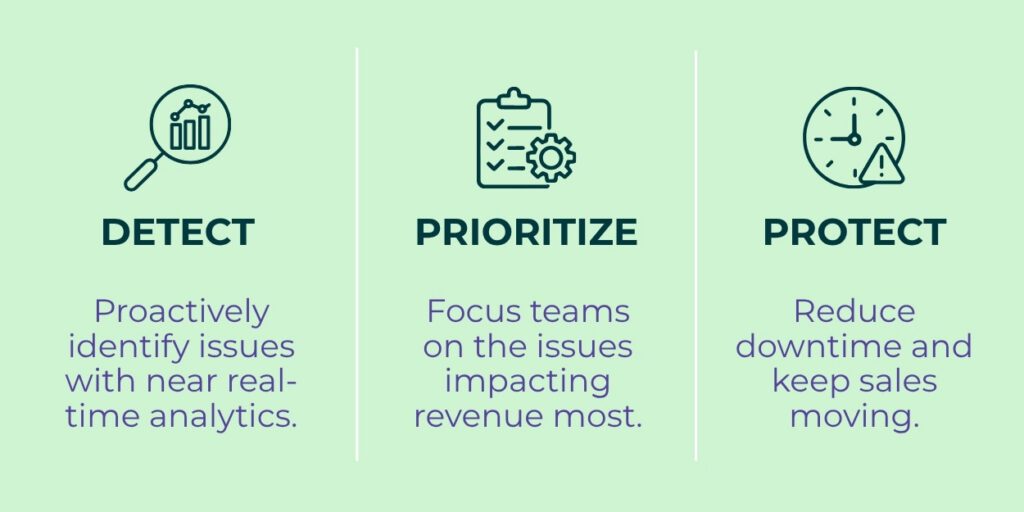
1. Detect Flow Issues Earlier
Through advanced AI technology, Titan Cloud helps fuel operators accurately detect slow-flow and nozzle-down issues across the network and turn flow-rate data into operational insights teams can act on.
Instead of waiting for customer complaints or site-level escalation, teams can identify abnormal performance patterns across sites, dispensers, and fueling positions, then focus attention where maintenance response is most needed.
2. Prioritize the Issues That Matter Most
Not every maintenance issue has the same financial impact. Teams need to understand which sites, dispensers, and fueling positions are most likely to affect revenue so they can focus resources where they matter most.
3. Protect Fuel Sales and Customer Loyalty
When teams can detect and act faster, they can reduce downtime, keep fuel sales moving, and give customers a better forecourt experience.
Even when an issue is detected, action can stall.
Maintenance teams are often managing a high volume of work orders, multiple vendors, aging assets, and competing priorities. Without clear data, it can be difficult to know which issue should be escalated first.
That is especially true when the issue is slow flow rather than a complete outage.
A slow-flowing nozzle may not look urgent in a queue of maintenance requests. But if it affects a high-volume site or a key fueling position, the revenue impact may be significant.
This is where fuel analytics and maintenance workflows need to work together.
When performance data is connected to maintenance action, operators can move from insight to resolution faster. They can identify the issue, understand the potential impact, route the work, and track progress through completion.
With the right approach, operators can move beyond scattered reports and delayed escalation.
They can start answering questions like:
That is the difference between reactive maintenance and proactive forecourt performance management.
Titan Cloud helps fuel retailers improve visibility across fuel operations, maintenance, and asset performance.
With Titan Cloud, operators can use flow-rate analytics to detect slow flow and nozzle-down issues earlier, identify affected sites and fueling positions, prioritize maintenance, and reduce avoidable downtime.
The result is better control over the assets that keep fuel sales moving.
Titan Cloud gives teams the insight they need to find revenue leaks, focus maintenance resources, and protect the customer experience across distributed fuel networks.
Slow flow and nozzle downtime can quickly become revenue, customer experience, and site performance issues.
Titan Cloud helps fuel retailers identify where dispenser and nozzle performance issues may be affecting throughput, delaying response, or creating missed revenue opportunities.
Book a Dispenser Performance Assessment to review your current monitoring process, discuss common site-level challenges, and find practical ways to improve visibility and response.
Attending NACS? Book time with Titan Cloud to explore how flow-rate analytics can help reduce downtime risk and keep fuel sales moving.
What is slow flow in fuel retail?
Slow flow occurs when fuel dispenses more slowly than expected through a nozzle, dispenser, or fueling position. The nozzle may still be operational, but the customer experience is degraded because the transaction takes longer than normal.
What is a nozzle-down issue?
A nozzle-down issue means a fueling nozzle is unavailable, bagged, out of service, or unable to dispense fuel properly. It may be caused by a nozzle issue, filter issue, dispenser problem, downstream equipment issue, or another site-level factor.
Is slow flow the same as nozzle downtime?
No. A nozzle-down issue usually means the nozzle is unavailable or visibly out of service. Slow flow means the nozzle may still be available but is dispensing fuel more slowly than expected. Both can hurt fuel throughput, customer experience, and revenue, but slow flow is often harder to detect because the asset still appears to be working.
Why does slow flow matter for fuel retailers?
Slow flow can create longer wait times, frustrate customers, reduce fuel throughput, and contribute to lost transactions. It may also affect inside-store visits if customers leave the site or have a poor experience at the pump.
What causes slow flow at a fuel dispenser?
Slow flow can be caused by clogged filters, dispenser issues, nozzle problems, tank or piping constraints, pump issues, maintenance delays, or other downstream forecourt problems. That is why it is important to look beyond the nozzle itself and understand the broader dispenser performance pattern.
Why are slow-flow issues hard to detect?
Slow-flow issues are hard to detect because the nozzle may still be dispensing fuel. Many teams only become aware of a problem after a customer complains, a site employee reports it, or sales performance begins to show the impact. Low-volume fueling positions can make detection even harder because fewer transactions create less data to evaluate. In the Nozzle Down campaign review, Titan Cloud’s team noted that many fueling positions have low daily transaction counts, making it harder to separate normal low activity from true performance issues.
How can flow-rate analytics help detect slow flow?
Flow-rate analytics help fuel operators identify when fuel is not moving as expected across sites, dispensers, and fueling positions. By comparing current activity to expected patterns, analytics can help teams spot flow anomalies, identify affected assets, and prioritize issues that may need maintenance attention.
How can dispenser performance issues affect revenue?
Dispenser and nozzle performance issues can contribute to lost transactions, missed fuel revenue, customer frustration, longer wait times, and reduced inside-store traffic. Even when a nozzle is technically working, a poor fueling experience can cause customers to choose another pump, another site, or another brand.
How does Titan Cloud help with dispenser and nozzle performance?
Titan Cloud helps fuel retailers improve visibility into dispenser and nozzle performance by using fuel analytics to identify flow anomalies, affected sites, and fueling positions that may need attention. This helps teams prioritize response, reduce avoidable downtime, and keep fuel sales moving.
What is a Dispenser Performance Assessment?
A Dispenser Performance Assessment is a 30-minute discovery call with Titan Cloud’s Solutions Consulting team. The call is designed to help fuel retailers identify dispenser and nozzle performance issues that may be contributing to lost transactions, customer frustration, and missed fuel revenue.
What happens during a Dispenser Performance Assessment?
During the assessment, Titan Cloud’s Solutions Consulting team will review how your organization monitors dispenser and nozzle performance today, discuss common site-level challenges, and highlight practical opportunities to improve visibility, prioritize response, and reduce avoidable downtime.
What information do I need to provide for the assessment?
No extensive data preparation is required. Titan Cloud may ask for your approximate number of fueling locations, current monitoring process, common dispenser or nozzle issues, and high-level examples of recent performance concerns.
Who should request a Dispenser Performance Assessment?
Fuel operations, maintenance, facilities, operations, and supply/logistics leaders at multi-site fuel retailers should consider requesting an assessment if they want better visibility into slow flow, nozzle downtime, dispenser performance, maintenance prioritization, or forecourt customer experience.
Is the Dispenser Performance Assessment a product pilot?
No. The assessment is a discovery call, not a full product pilot. It is intended to help your team understand where dispenser or nozzle performance issues may be affecting operations and where better visibility could help improve response.