Beyond Rack Price: Best Buy Intelligence for Fuel Supply and Logistics
Mar 10, 2026


Titan Cloud’s Carrier Communications Dashboard, part of Titan Supply & Logistics, helps fuel operators manage fully carrier managed logistics with clearer visibility, stronger carrier accountability, and less manual dispatching effort.
In a fully carrier managed model, carriers own day-to-day delivery execution. But operators still need control over inventory risk, forecasted demand, contract alignment, delivery activity, reconciliation exceptions, and carrier performance.
The Carrier Communications Dashboard gives customers one workspace to define inventory preferences, generate forecasted order requests, communicate with carriers, provide supply and contract context, review lift and drop activity, resolve exceptions, and measure performance through weekly and monthly scorecards.
The result: carriers own execution, while customers maintain visibility, governance, and control.
For many multi-location fuel operators, the challenge is not deciding whether fuel logistics matters. Reliable delivery execution protects revenue, prevents runouts, supports customer experience, and keeps sites operating the way the business expects.
The harder question is how much of the day-to-day fuel logistics process the operator should manage directly.
For some organizations, especially grocers, retailers, convenience chains, and other multi-site operators where fuel is important but not the core operating model, fully carrier managed logistics can be the right answer. In this model, carriers take responsibility for monitoring inventory, identifying when deliveries are needed, planning delivery activity, dispatching loads, and completing required delivery steps.
But handing execution to carriers does not mean giving up visibility, governance, or accountability.
That is where the industry needs to evolve.
Fully carrier managed fuel logistics often sounds simple in theory. The customer sets expectations, the carrier executes, and fuel arrives where it is needed.
In practice, the workflow is usually more fragmented.
Inventory views may live in one system. Forecasts may come from another. Contract information may be stored separately. Carrier communication often happens through email, phone calls, text messages, portals, spreadsheets, lift tickets, drop tickets, and manual reconciliation follow-up.
That creates a visibility gap.
The carrier may be doing the work, but the customer still needs answers:
Without a centralized operating view, carrier management becomes reactive. Teams spend too much time chasing updates, reconciling disconnected records, and trying to determine whether service issues are isolated events or recurring performance patterns.
Fully carrier managed operations should reduce internal dispatching effort. They should not create a new layer of manual follow-up.
The next step for fully carrier managed logistics is not just better communication. It is structured, measurable carrier performance management.
Titan Cloud’s Supply & Logistics Carrier Managed Dashboard gives customers one operating workspace for fully carrier managed delivery operations. It brings together forecasted order visibility, inventory risk, carrier assignments, location and contract context, supply inputs, carrier communication, completed lift and drop activity, reconciliation exceptions, and weekly and monthly carrier scorecards.
The goal is straightforward: carriers own day-to-day delivery execution, while the customer maintains visibility, governance, and accountability across the delivery lifecycle.
That distinction matters.
The customer should not need to manually create and manage every delivery. But the customer should still be able to define inventory preferences, set operating expectations, monitor risk, review completed activity, manage exceptions, and measure carrier performance using consistent rules.
A fully carrier managed model only works well when both sides operate from the same source of truth.
Carrier-managed logistics depends on giving carriers enough context to make the right operational decisions.
With Titan Cloud, customers can configure preferred tank levels and inventory strategies. Titan Logistics uses those preferences to create forecasts and order requests for assigned carriers. Carriers can then see forecasted demand and inventory risk, helping them plan work proactively instead of waiting for manual dispatch.
The dashboard also connects delivery execution to location, contract, and supply context. Contracts and allocations can be stored in Titan Logistics so orders reflect the customer’s preferred lift locations and supply paths. This helps carriers execute against the customer’s operating strategy while giving the customer better visibility into off-contract or unauthorized activity.
That is a meaningful shift. Instead of simply asking, “Did the delivery happen?” customers can ask better questions:
Those questions move logistics management from anecdotal to measurable.
Carrier communication is still essential. But communication becomes more valuable when it happens in context.
Instead of discussing a missing ticket, low inventory risk, off-contract lift, or reconciliation exception through a disconnected email thread, customers and carriers can communicate directly inside the dashboard alongside the related forecast, order, ticket, delivery record, exception, or scorecard item.
That helps reduce confusion and preserve the operational history behind each issue.
For example, a customer may need to ask a carrier for an ETA on a forecasted delivery need, follow up on a location at risk of low inventory, request documentation for a missing drop ticket, or understand why a carrier lifted from a different supply source. When those conversations happen inside the same workspace as the operational record, teams can resolve issues faster and with better context.
The value is not just fewer emails. The value is clearer accountability.
Carrier scorecards are one of the most important ways the Carrier Managed Dashboard turns delivery execution into measurable performance.
Customers can configure reconciliation rules to evaluate whether carriers prevented runouts, responded to forecasted needs, lifted from the correct contract, entered complete delivery data, delivered expected quantities, and resolved exceptions on time.
The results feed weekly and monthly scorecards, giving customers a more consistent way to identify top performers, address underperformance, track improvement, and support volume or contract decisions with data.
Carriers also gain clearer feedback on where they can improve, making performance conversations more objective and actionable.
One national grocery retailer with a large fuel site network is using a fully carrier managed model to reduce internal dispatching effort while maintaining oversight of delivery execution.
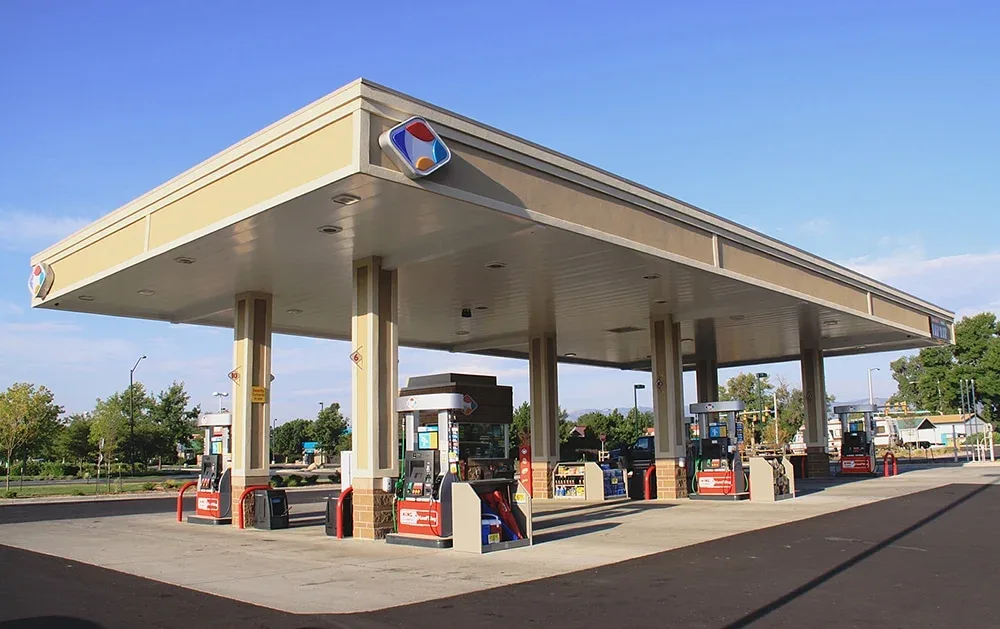
With the Carrier Communications Dashboard, the retailer can give carriers visibility into forecasted delivery needs, inventory risk, contract and supply context, and reconciliation expectations. Carriers manage day-to-day planning and execution, while the customer monitors completed lift and drop activity, resolves exceptions, and measures performance through weekly and monthly scorecards.
For a retailer focused on grocery and convenience operations, not fuel dispatching, this creates a better balance: carriers own execution, while the customer maintains visibility, governance, and measurable accountability.
Fully carrier managed logistics should not mean unmanaged logistics.
As fuel supply and distribution networks become more complex, operators need a better way to let carriers own execution while still maintaining visibility, governance, and measurable accountability.
Titan Cloud’s Supply & Logistics Carrier Communications Dashboard helps make that possible by bringing inventory preferences, forecasted order requests, carrier communication, supply and contract context, delivery activity, exceptions, and scorecards into one operating workspace.
The result: a more structured, transparent, and accountable model for carrier-managed fuel logistics.
Carriers own execution. Customers keep control.

What is fully carrier managed fuel logistics?
Fully carrier managed fuel logistics is an operating model where carriers are responsible for planning and executing delivery activity. Instead of waiting for the customer to manually create, assign, and manage every delivery, carriers monitor demand, plan loads, dispatch deliveries, and complete required delivery steps.
The customer still defines the strategy, inventory preferences, operating rules, supply expectations, and performance standards.
What is Titan Cloud’s Carrier Communications Dashboard?
Titan Cloud’s Supply & Logistics Carrier Communications Dashboard is a centralized operating workspace for fully carrier managed logistics. It gives customers one place to manage forecasted order visibility, inventory risk, carrier communication, location and contract context, completed delivery activity, reconciliation exceptions, and carrier performance scorecards.
How does the Carrier Communications Dashboard help customers maintain control?
The dashboard helps customers maintain control by giving them visibility into delivery risk, carrier response, contract alignment, completed lift and drop activity, exceptions, and performance trends. Customers can let carriers own execution while still monitoring whether carriers are meeting operational expectations.
Who is a strong fit for the Carrier Communications Dashboard?
The Carrier Communications Dashboard is a strong fit for organizations that operate through third-party carriers, want carriers to manage delivery execution, need visibility without manually managing every delivery, want to consolidate carrier communication, and want to measure carrier performance using weekly and monthly scorecards.
Strong-fit organizations may include convenience store chains, fuel retailers, grocers, fuel marketers, wholesale distributors, and other multi-location fuel operators.
What is the main value of Titan Cloud’s Carrier Communications Dashboard?
The main value is accountable carrier-managed logistics. Customers can reduce manual dispatching effort while preserving visibility, governance, and control. Carriers can own execution, and customers can measure whether that execution meets the business’s inventory, delivery, contract, and performance expectations.