Apr 08, 2026
4 Fuel Loss Scenarios — and How Leading Operators Are Stopping Them

Read More

Seven APAC governments (Malaysia, Indonesia, Thailand, Pakistan, the Philippines, Vietnam, and Sri Lanka) introduced or expanded work-from-home mandates in early 2026, mostly to conserve fuel and ease energy demand. For fuel operators, convenience retailers, and fleet managers across the region, the question is no longer “can people work from home?” but “can our operations keep running when the team is distributed?” This guide breaks down the policy changes by country, explains what they mean for compliance and maintenance, and outlines how connected fuel asset optimization platforms close the visibility gap.
Across APAC, work from home is becoming much more than a flexible work arrangement.
In many recent conversations with operators, partners, and peers, one theme keeps coming up: how do we stay prepared when the operating environment changes quickly? Whether the challenge is fuel supply, rising costs, regulatory pressure, or day-to-day site operations, the need for visibility and resilience has never been more important.
That is why the recent return of work-from-home measures across parts of Asia is worth paying attention to.
Malaysia introduced a work-from-home policy for ministries, agencies, and government-linked companies beginning April 15, 2026, allowing civil servants who live more than eight kilometers from the office to work remotely three days a week.
Indonesia began requiring public sector employees to work from home every Friday and also limited subsidized fuel purchases for private vehicles. Thailand ordered civil servants to work from home for the duration of the crisis and added energy-saving measures such as reduced elevator use and lighter office attire to limit air-conditioning demand. Pakistan introduced a four-day work week, mandatory remote work for 50% of public sector staff, and a temporary school closure.
The Philippines designated Fridays as remote work days for some government staff, Vietnam encouraged private businesses to adopt remote work arrangements, and Sri Lanka declared every Wednesday a public holiday for state institutions to stretch fuel supplies.
These examples show how quickly organizations may need to adapt. For fuel operators, convenience retailers, fleet managers, and businesses managing distributed assets, the question is not just whether people can work from home.
The bigger question is: can critical operations continue when teams are not physically together?
In my work, I focus a lot on building rapport, trust, and meaningful relationships. I believe the best outcomes come when we listen to each other, exchange ideas, and learn from different perspectives.
That same mindset applies to operations.
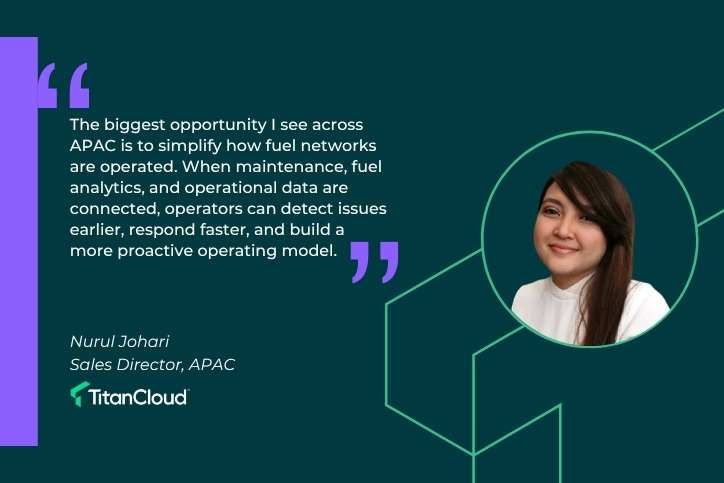
Remote work is not only about having a laptop and joining meetings online. For our industry, it means making sure teams have access to the right information, at the right time, so they can make good decisions from wherever they are.
A compliance manager still needs to know which inspections are complete. A maintenance team still needs to know which issues require action. An operations leader still needs to see what is happening across sites. A regional team still needs to coordinate vendors, track costs, and plan ahead.
When this information is spread across paper records, spreadsheets, emails, and phone calls, remote work becomes difficult. It creates delays, blind spots, and unnecessary stress.
Titan Cloud helps by bringing compliance, maintenance, fuel analytics, and asset information into one connected platform. With better visibility, teams can work together more effectively, even when they are not in the same office.
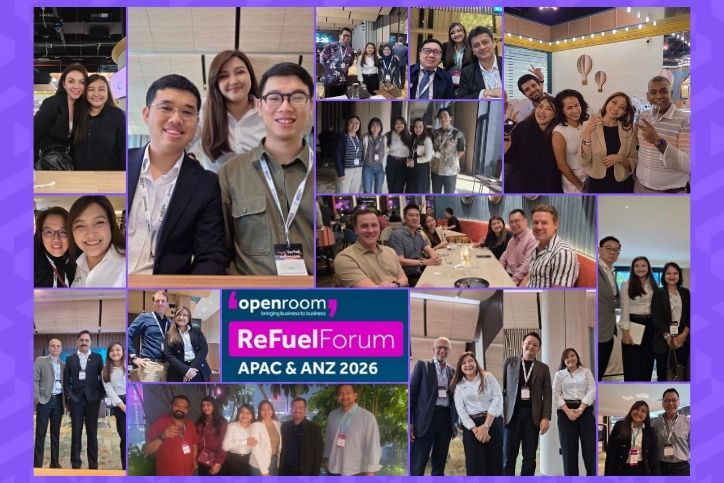
At this year’s ReFuel Forum, many conversations revolved around data and preparing for an uncertain future. That really stood out to me.
Across APAC, operators are managing complex networks across different markets, regulations, site formats, and vendor relationships. Every country has its own challenges. Every business has its own priorities. But the need for better visibility is consistent.
When teams have reliable data, they can plan more easily. They can see where risk is increasing. They can respond faster to site issues. They can make better decisions about maintenance, compliance, and long-term investment.
That is where Titan Cloud can create real value.
Instead of reacting only after a problem happens, operators can use connected data to understand what is happening across their network. They can identify patterns, prioritize action, and reduce costs over time.
For me, this is one of the most exciting parts of working with customers: understanding their challenges, learning how they operate, and helping them find practical ways to improve.
One thing that is clear in our industry is that compliance does not pause during disruption.
Even when teams are working remotely, regulatory deadlines still matter. Tests still need to be completed. Documents still need to be available. Exceptions still need to be addressed.
Titan Cloud helps compliance teams manage this work digitally, so they can track requirements, monitor status, and reduce risk across multiple locations. This is especially important in APAC, where organizations may be working across different jurisdictions, languages, and operating models.
With a centralized system, teams do not have to wait for updates to move from one person to another. They can see what is complete, what is overdue, and what needs attention.
That visibility builds confidence.
The same is true for maintenance.
When a site issue happens, waiting is costly. A delayed repair can affect operations, customer experience, safety, and compliance. In a remote or hybrid environment, maintenance teams need a clear way to coordinate work, follow up with vendors, and understand progress.
Titan Cloud helps teams manage maintenance activity more efficiently by centralizing workflows and making information easier to access. Whether someone is in the office, at home, or traveling between sites, they can stay connected to the work that matters.
This is how remote work becomes more than a policy. It becomes part of business continuity.
The recent work-from-home measures across Malaysia, Indonesia, Thailand, Pakistan, the Philippines, Vietnam, and Sri Lanka show how quickly operating conditions can change. For businesses, the lesson is clear: flexibility requires preparation.
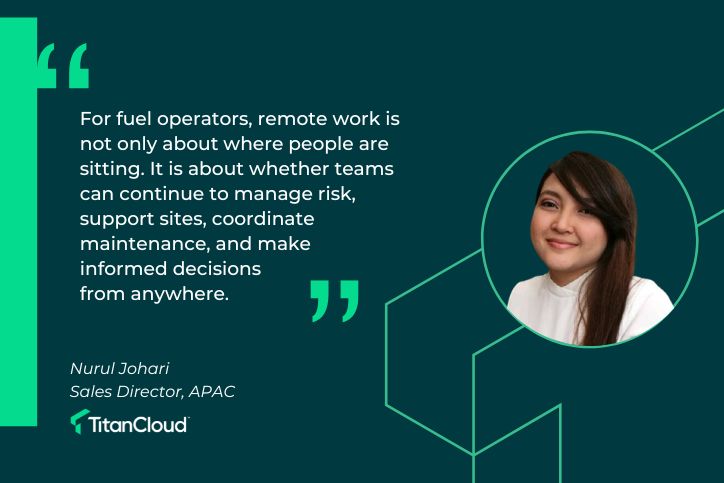
For fuel operators, remote work is not only about where people are sitting. It is about whether teams can continue to manage risk, support sites, coordinate maintenance, and make informed decisions from anywhere.
That is what Titan Cloud helps make possible.
By connecting people, data, and workflows, Titan Cloud gives operators better visibility, easier planning, improved operations, and the opportunity to reduce costs over time.
And just like the best conversations at industry events, it all comes back to working together, learning from each other, and creating long-term success.
Because no matter where teams are working, the work still needs to move forward.