Apr 07, 2022
Safeguard Critical Fueling Infrastructure With Cybersecurity

Read More

Security governance isn’t a one-time project. It’s a posture — built deliberately, maintained continuously, and proven through repeatable practices.
That’s why Titan Cloud Software LLC is proud to share that we’ve achieved ISO/IEC 27001:2022 certification, validating our Information Security Management System (ISMS) against a globally recognized standard.
For customers who depend on Titan Cloud as a trusted operational platform, this certification is more than an announcement. It’s independent confirmation that Titan Cloud manages information security through a structured, risk-based system that scales with our business and evolves with emerging threats.
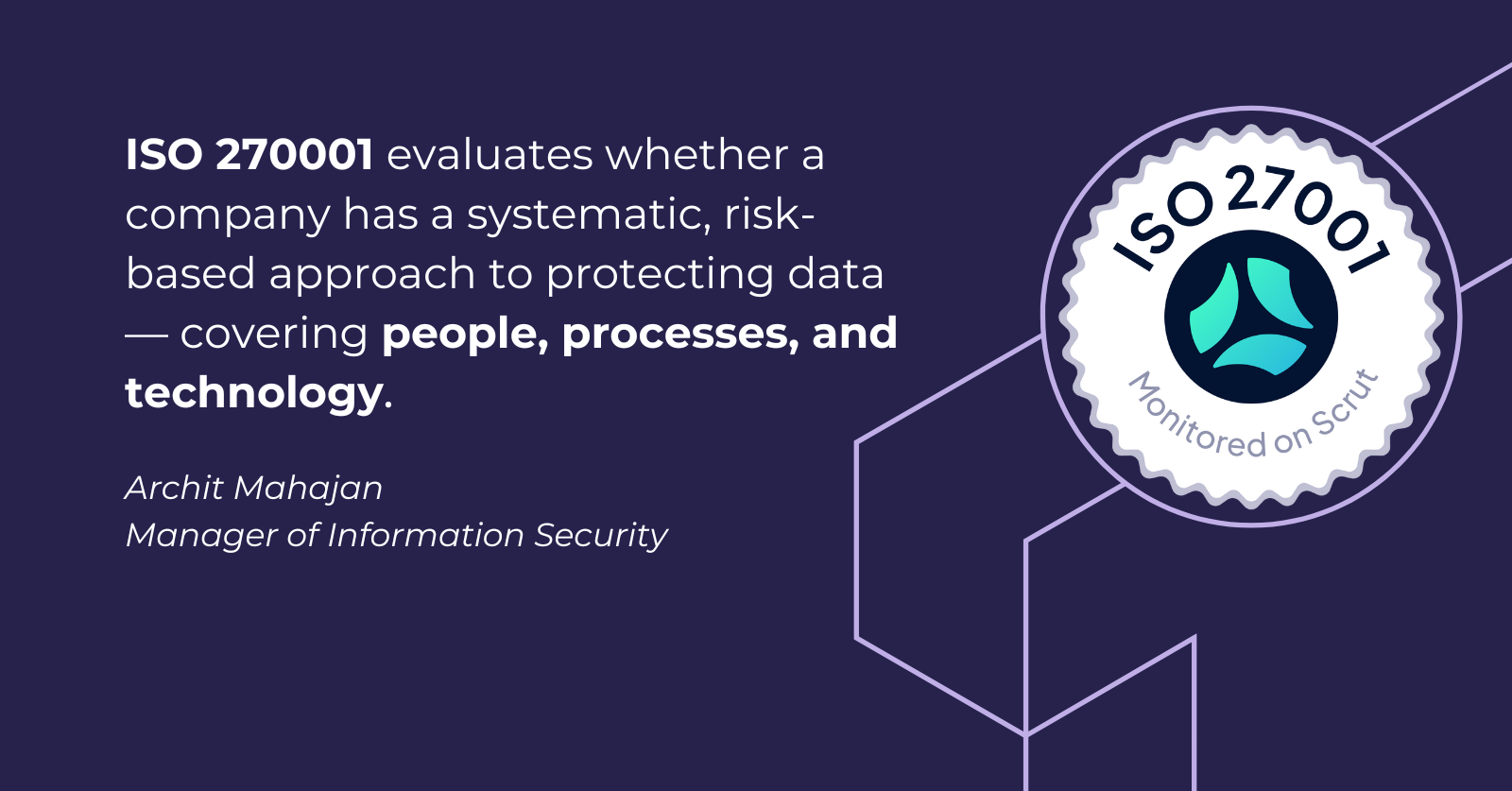
ISO/IEC 27001:2022 is widely considered the international benchmark for how organizations manage information security. Unlike point solutions or single controls, ISO 27001 evaluates whether a company has a systematic, risk-driven approach to protecting data across the organization. As Archit Mahajan, Titan Cloud’s Manager of Information Security, explains:

“Rather than focusing on a single tool or control, ISO 270001 evaluates whether a company has a systematic, risk-based approach to protecting data — covering people, processes, and technology.”
In practice, ISO certification is designed to answer a simple but important question: Can this organization consistently manage security — not just promise it?
Titan Cloud pursued ISO 27001 to meet the moment — both externally and internally. Customer expectations are rising, especially among enterprise organizations with formal vendor security requirements. At the same time, Titan Cloud wanted a disciplined framework for strengthening security maturity across the business.
Archit describes the “why now” clearly: “It was… customer-driven, market-driven, and risk-driven. All three.”
ISO 27001 provided a structured way to identify key risks, prioritize controls, and embed governance into everyday operations — so security becomes part of how Titan Cloud works, not something separate that only shows up during audits.
A meaningful certification isn’t about whether policies exist — it’s about whether they’re tied to real risks and proven through consistent operation. ISO 27001’s “risk-based” approach requires organizations to:
That “prove it” standard is central to the value customers get from ISO 27001. Archit shared, “The toughest part was shifting from ‘we do this’ to ‘we can consistently prove this.’ ISO 27001 demanded evidence, not just intent.”
The audit itself included reviews of documentation, interviews with teams, and validation of operational evidence. Titan Cloud also completed an internal audit ahead of the external review to identify gaps and strengthen readiness — another key element of maintaining a real security management system.
While ISO 27001 includes a broad set of requirements, Titan Cloud’s most impactful improvements were both structural and operational — focused on making security repeatable across the company.
Key steps included establishing formal information security governance and clearer ownership for security decisions, alongside strengthened operational controls such as identity and access management, endpoint protection, vulnerability management, and security awareness across the organization.
This is the difference between security as a set of initiatives and security as a system: governance, accountability, and consistent execution that can be demonstrated over time.
Customers and partners should view ISO 27001:2022 certification as independent validation that Titan Cloud manages security through a globally recognized framework — one that requires regular assessment, intentional control design, and leadership accountability.
Equally important: the certification scope is not limited to engineering or IT alone. ISO 27001 evaluates how security is embedded across the organization, including supporting functions like IT Ops, HR, Finance, Marketing, Sales and Customer Success. Real security depends on how the whole business operates.
For security-conscious organizations, that breadth matters. It demonstrates that security isn’t isolated to a team or toolset; it’s integrated into governance, processes, and the way decisions are made.
ISO 27001 isn’t “one-and-done.” Maintaining certification requires ongoing internal audits, management reviews, risk assessments, corrective actions, and surveillance audits during the certification cycle.
More importantly, Titan Cloud’s ISMS is a living framework — designed to evolve as the business grows, as new capabilities are introduced, and as threats change. That’s the core of a mature security posture: continual improvement built into normal operations, not bolted on after the fact.
ISO/IEC 27001:2022 certification marks an important milestone — but the bigger story is what it reflects: Titan Cloud’s long-term commitment to disciplined, risk-based information security that can be independently verified and continuously improved.
If you’d like to learn more about Titan Cloud’s security program or how this certification supports your organization’s vendor security requirements, Contact Us.